





Losing a job is hard enough when it happens for legitimate reasons. When it happens because you reported something wrong, because of who you are, or because your employer wanted to silence you, that is a different matter entirely. California law gives you real protections in those situations, and they are worth understanding before you assume there is nothing you can do. If you were let go from a job in San Mateo and the circumstances do not add up, talk to our team about what happened and find out whether you have a claim worth pursuing.
Schedule a Consultation to Review Your Case
At-Will Employment Has Real Limits in California
California is an at-will employment state. That means an employer can generally end the employment relationship for any reason, or for no stated reason at all. But at-will does not mean unlimited. Employers cannot fire someone for a reason that violates California or federal law, regardless of how they frame the termination.
This difference matters since many employers frequently use at-will employment as a shield, treating it as a blanket defense against any scrutiny of a termination decision. An experienced wrongful termination attorney knows how to look past that framing and identify what actually drove the decision. The stated reason and the real reason are often not the same thing, and the gap between them is where these cases are built.
What Qualifies as Wrongful Termination in California
A termination is wrongful when the employer's actual motivation violates a protected right or status under California or federal law. Wrongful termination in California most commonly involves one of the following:

- Discrimination. Firing an employee based on age, race, gender, sexual orientation, disability, national origin, religion, pregnancy, or other protected characteristics violates the California Fair Employment and Housing Act and federal anti-discrimination statutes.
- Retaliation. Employees who report workplace violations, file complaints, or assert their rights are protected from being fired in response. Retaliation is one of the most common wrongful termination scenarios we handle.
- Whistleblower protection. Reporting illegal activity, safety violations, fraud, or other unlawful conduct to a supervisor or government agency is legally protected. Employers who fire employees for speaking up may face significant liability under California's whistleblower protection laws.
- Leave and accommodation violations. Terminating an employee for taking protected medical leave, family leave under the CFRA or FMLA, or for requesting a disability accommodation is unlawful.
- Workers' compensation retaliation. Firing an employee because they filed or intend to file a workers' compensation claim is specifically prohibited under California Labor Code § 132a.
- Wage claim retaliation. Employees who complain about unpaid wages, missed meal and rest breaks, or overtime violations are protected from termination. If your firing followed a wage and hour dispute, that timing is legally significant.
- Breach of contract. If an employment contract or an implied contract created by company policy or the employer's conduct promised job security beyond at-will terms, a termination that violates those terms may give rise to a breach of contract claim.
- Military service. Terminating an employee because of military obligations, including drill, deployment, or special assignments, violates both California and federal law.
This list covers the most common situations, but is not exhaustive. If the circumstances of your termination feel wrong, they may be worth examining.
Proving a Wrongful Termination Claim
Most employers do not announce illegal motivations when they fire someone. The stated reason is typically something neutral, a performance concern, a reorganization, or a policy violation. The work of a wrongful termination lawsuit is establishing what actually drove the decision and connecting it to a protected status or activity.
Evidence That Strengthens Your Case

The strongest wrongful termination claims are built on documentation. What you have access to right now, before a case is formally opened, can make a significant difference. Useful evidence includes:
- Performance reviews and evaluations, especially if they were positive before the termination
- Written communications with supervisors and HR, including emails and messages
- Your employee handbook and any written policies about discipline or termination procedures
- Performance improvement plans (PIPs) and documentation of any disciplinary steps
- Records of any complaints you made, including dates and the names of people you reported to
- Notes about verbal conversations where you can document what was said and when
- Contact information for coworkers or supervisors who witnessed relevant events
California law gives employees the right to request their personnel file within 30 days of a written request under Labor Code § 1198.5. Requesting that file promptly after termination preserves your access to records your employer controls.
Timing Is Often the Strongest Signal
In retaliation and discrimination cases, the sequence of events frequently tells the story. A termination that follows closely after a complaint, a leave request, a workers' comp filing, or a report of illegal activity raises an inference of improper motive. Courts and juries pay attention to timing, and so do we. When we review a case, one of the first things we map is the chronology between protected activity and the termination decision.
Talk with a Lawyer About Your Case
Damages in a San Mateo Wrongful Termination Case
If your employer fired you for an illegal reason, California law provides meaningful remedies. The damages available depend on the specific claims at issue, but wrongful termination cases can include recovery across several categories. The table below summarizes what is typically at stake:
| Damage type | What it covers |
| Lost wages and benefits | Back pay from termination to resolution, plus the value of lost health insurance, bonuses, retirement contributions, and other compensation |
| Future lost earnings | Reduced earning capacity if the termination affects your ability to find equivalent employment, including reputational harm caused by false performance claims |
| Emotional distress | Compensation for anxiety, depression, and psychological harm resulting from the unlawful firing |
| Punitive damages | Available in cases of particularly egregious employer conduct, including deliberate retaliation or discrimination. Designed to punish and deter |
| Reinstatement or front pay | Return to your former position, or compensation for future income if reinstatement is not practical given the circumstances |
| Attorney's fees and costs | Many California employment statutes authorize fee-shifting, meaning the employer pays your legal costs if you prevail |
California also allows claims to be filed with the Civil Rights Department (CRD, formerly the DFEH) before pursuing a civil lawsuit. For most discrimination and harassment claims, exhausting this administrative process is a required step. Employees in San Mateo have access to the CRD's Bay Area office, and some claims may also be filed with the federal Equal Employment Opportunity Commission. The deadlines for these filings are short, which is one reason acting quickly matters. Our San Mateo employment law attorneys handle both the administrative filing and any subsequent litigation.
How a Wrongful Termination Lawsuit Proceeds
Understanding the process helps you make better decisions at every stage. While every case is different, most wrongful termination cases in California follow a similar path.

- Case evaluation. We review the circumstances of your termination, your employment history, any documentation you have, and the applicable legal framework. This initial review determines whether a viable claim exists and which legal theories apply.
- Administrative filing (if required). For discrimination and retaliation claims under FEHA, a charge must be filed with the CRD before a lawsuit can proceed. We handle this step and obtain the right-to-sue notice needed to move forward.
- Filing the complaint. Once the administrative process is complete, we file a formal complaint in San Mateo Superior Court or the appropriate federal court. The complaint outlines the claims and the relief sought.
- Employer response and discovery. The employer responds to the complaint and may attempt to have it dismissed. If the case proceeds, both sides conduct discovery, exchanging documents, taking depositions, and gathering evidence under oath.
- Settlement negotiations. The majority of employment cases resolve before trial. We negotiate from a position built on the strength of your file, not urgency, and we do not recommend accepting a settlement that does not reflect what your case is worth.
- Trial, if necessary. If a fair resolution cannot be reached, we take the case to trial. We prepare every case as if it will go to court, which strengthens our position throughout the negotiation process.
California's statute of limitations for FEHA-based wrongful termination claims is generally three years from the date of the unlawful act. Other claims carry shorter deadlines. Do not assume you have time to wait.
When Wrongful Termination Involves Other Violations
Wrongful firing rarely happens in isolation. In many cases, the events leading up to a termination involve additional unlawful conduct that creates separate claims. A hostile work environment, unpaid overtime, denied leave, or safety violations that preceded the firing may each give rise to independent liability.
If your termination followed a dispute about wages, missed breaks, or unpaid overtime, that pattern may support both a wrongful termination claim and a separate wage and hour claim under California law. If you were fired after reporting fraud, illegal activity, or safety violations, California whistleblower protections may apply on top of standard retaliation law, potentially increasing the damages available to you. We look at the full picture of what happened, not just the final act.
When You Can Sue Your Employer for Wrongful Termination
California's at-will rule means not every unfair firing is unlawful. But when there is a connection between the termination and a protected characteristic, a protected activity, or a contractual right, a claim may exist regardless of the reason the employer gave.
If you were fired without explanation, that alone does not create a claim. But the absence of a stated reason can be significant when the timing, your work history, and the surrounding circumstances suggest something else was at play. A free case evaluation with our team is the fastest way to get a straight answer about whether your situation gives rise to a viable claim under California law.
GFF&F Represents San Mateo Employees Who Were Wrongfully Fired
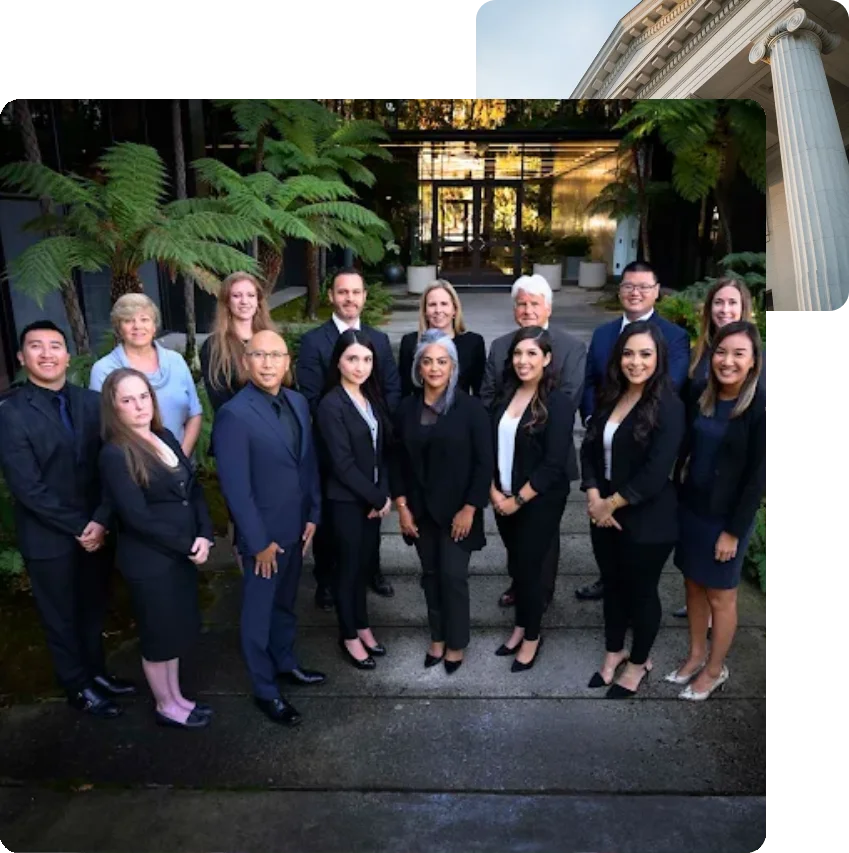
San Mateo County's workforce spans technology, healthcare, finance, retail, and hospitality, and workers in every sector are protected by the same California employment laws. We represent employees from across the county who have been let go under circumstances that do not hold up to scrutiny. We know how local employers and their insurers approach these cases, and we build files that answer their arguments before they make them.
Our firm handles wrongful termination cases on a contingency fee basis. You pay nothing unless we recover compensation for you. If you believe your firing was unlawful, contact us for a free consultation and let us evaluate whether you have a case worth pursuing.